Dear Daughters,
In my first real job after college, I worked as a litigation paralegal at Sonnenschein, a large Chicago law firm with offices in New York, LA, and Washington, DC.
I was twenty-three years old, a graduate of James Madison University, and wearing a tie to work for the first time in my life. All around me were people who had fancier degrees than I had and weren’t shy about it. The attorneys had law degrees and state bar memberships. The other paralegals were Ivy League graduates or held official paralegal certificates.
I was the one “state school” kid in the bunch, and I wasn’t sure I belonged. One of the partners called me “the salt of the Earth,” which I took as a backhanded compliment at best. But I was considering law school, I needed a job in the meantime, and Sonnenschein was willing to hire me for the tidy sum of $23,600 per year. So I showed up, worked hard, and tried to learn.
One Saturday afternoon, I was in the office doing prep work for an upcoming trial. (Saturday work was common for litigation paralegals.) Two of the attorneys I worked for were debating legal strategy in the hallway outside the office I shared with another paralegal when one of them used the phrase “hoist with his own petard.”
The other attorney stopped him. “Wait,” he said, “What’s a petard?”
“It’s something from jousting,” the first attorney replied, with the casual confidence of a man who had never been wrong in his life. “Think medieval knights. Like a lance or something.”
I knew this was wrong. I had spent the better part of my last years of college studying Shakespeare, and the phrase “hoist with his own petard” comes from my all-time favorite play: Hamlet. Act 3, Scene 4, to be precise—where (spoiler alert!) Hamlet describes his plan to double-cross Rosencrantz and Guildenstern, catching them in a trap of their own making.
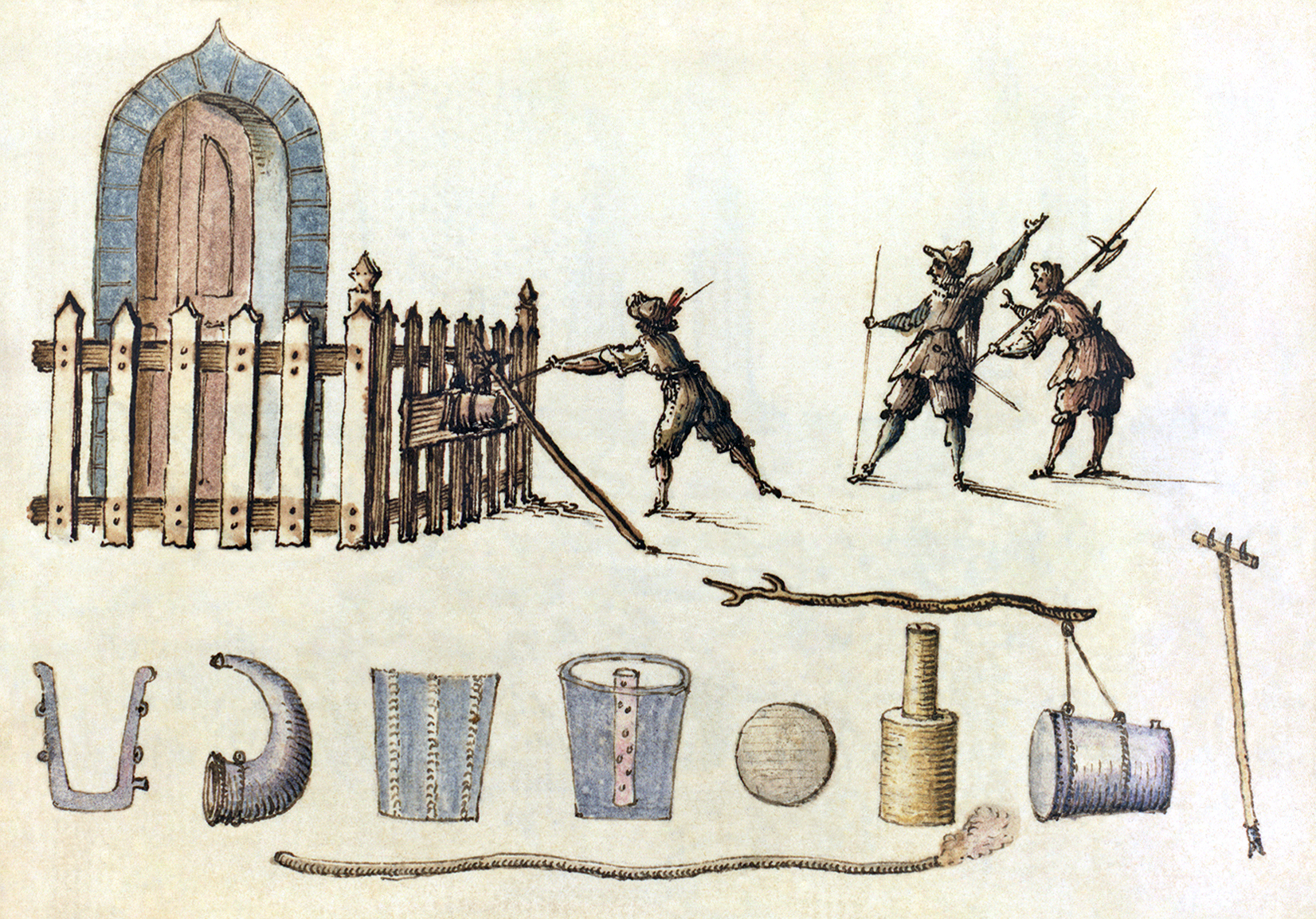
A petard was not a jousting implement. It was an early explosive device, something like a primitive land mine used to blow open castle gates. To be “hoist with your own petard” was to be blown up by your own bomb.
Always anxious to share my insights—not to mention talk Shakespeare—I informed the two attorneys of their error. Both looked at me with patronizing smiles. They knew I had studied Shakespeare, or I thought they did. But they didn’t rate me as an authority on anything. They were high-powered litigators. I was a lowly paralegal.
People in Shakespeare’s time, they informed me, had no knowledge of explosives (wrong!). The phrase clearly referred to something more medieval (also wrong!). I was welcome to my opinion, but they were busy and important men.
I was promptly dispatched to fetch a document.
When I got home that night, I dug through my notes on Hamlet and confirmed what I had told them. The word “petard” actually derives from the French “péter,” meaning to break wind. The early explosive device made a sound not unlike … well, breaking wind loudly and destructively. I found this hilarious at the time, since the attorneys were themselves so full of hot air. Shakespeare definitely wasn’t talking about jousting.
Did I inform the attorneys that I had confirmed my claims?
Nope. I didn’t think it was worth it. Ultimately, the meaning of petard was a trivial matter—to them and pretty much everyone else. But I had learned something important from the exchange.
These men weren’t interested in what a paralegal had to say on any subject, no matter how germane to the case at hand. They had been to law school. They had passed the bar. A twenty-three-year-old who had partly memorized Hamlet was not a credible source, even if he did have a brushed-up knowledge of Shakespeare.
This was, of course, a form of foolishness.
I saw similar foolishness elsewhere at the firm. Two of the Ivy League paralegals were so convinced of their own intelligence they regularly made careless mistakes—because they believed the basic documentation we did was beneath them. Meanwhile, the legal secretaries were often the best-informed people in the building, despite their lack of elite degrees. They knew which courts and judges were sticklers, which attorneys did the best work, and who really made decisions within the firm. The best of them regularly corrected errors in the attorneys’ writing and thinking under the auspices of word processing. Institutionally invisible, they were nonetheless directly “in the know.” Something similar is true in most organizations, I have since learned.
Ultimately, I decided not to go to law school. Instead, I wrote a paper about Hamlet—specifically about what it means to feel called to fix a world where “time is out of joint” and doubt you’re up to the task. That paper helped me win a fellowship to graduate school, where I studied (and later taught) rhetoric—and where I eventually got to work as a researcher at the Folger Shakespeare Library.
I never saw an actual petard, but I did see pictures of one. And I still think of those attorneys whenever I hear that line. Both were vastly more credentialed, experienced, and knowledgeable than I was. They were also, on the matter of petards, wrong. Worse, they were oblivious to potential correction because their expertise in one domain had led to a habit of not listening in others.
Make no mistake: expertise matters. It’s worth taking the time to learn a subject well, and it’s wise to respect those who have earned credentials based on their expertise. But never forget that expertise is a mile deep and an inch wide. You can know almost everything about one subject and still know almost nothing about something else. And everybody you will ever meet knows something you don’t.
All of the wisest people I have known—including several amazing, wonderful, brilliant attorneys—have understood this truth. They increase their expertise without becoming incurious. They know that the person across the table, or across the cubicle wall, always has unique experiences and perspectives to share. Even if that person happens to be a twenty-three-year-old Shakespeare fanatic who’s mainly there to fetch documents.
Confidence isn’t knowledge, and expertise isn’t wisdom. The insight you need may be sitting down the hall right now, in the head of some coworker who has the lived experience you lack. Wisdom isn’t a position you or anyone else can hold in relation to that person. It’s the habit of standing up, walking down the hall, and asking her what she knows—then listening carefully.
Love,
Dad
This letter is part of my memoir-in-progress, “Wonders All the Way Down.” Read a sample chapter here.
Discover more from Truths & Wonders
Subscribe to get the latest posts sent to your email.
