Dear Friends,
When I was a child in the late 1970s, my mother was anti-television. She believed the medium was going to rot people’s brains, turn us into lazy couch potatoes, and make us into antisocial brats.
She was certain beyond question that TV was no way for a little boy to spend his days. She thought outside play was best, followed by arts, crafts, reading, and make-believe. When we were young, my brother and I were allowed to watch television only in the den that doubled as Dad’s office (where Mom could easily keep an eye on the screen) and only for a maximum of two hours per week.
That’s right, folks. Long before the digital age, I had a draconian screen-time restriction.
I should probably be grateful for it.
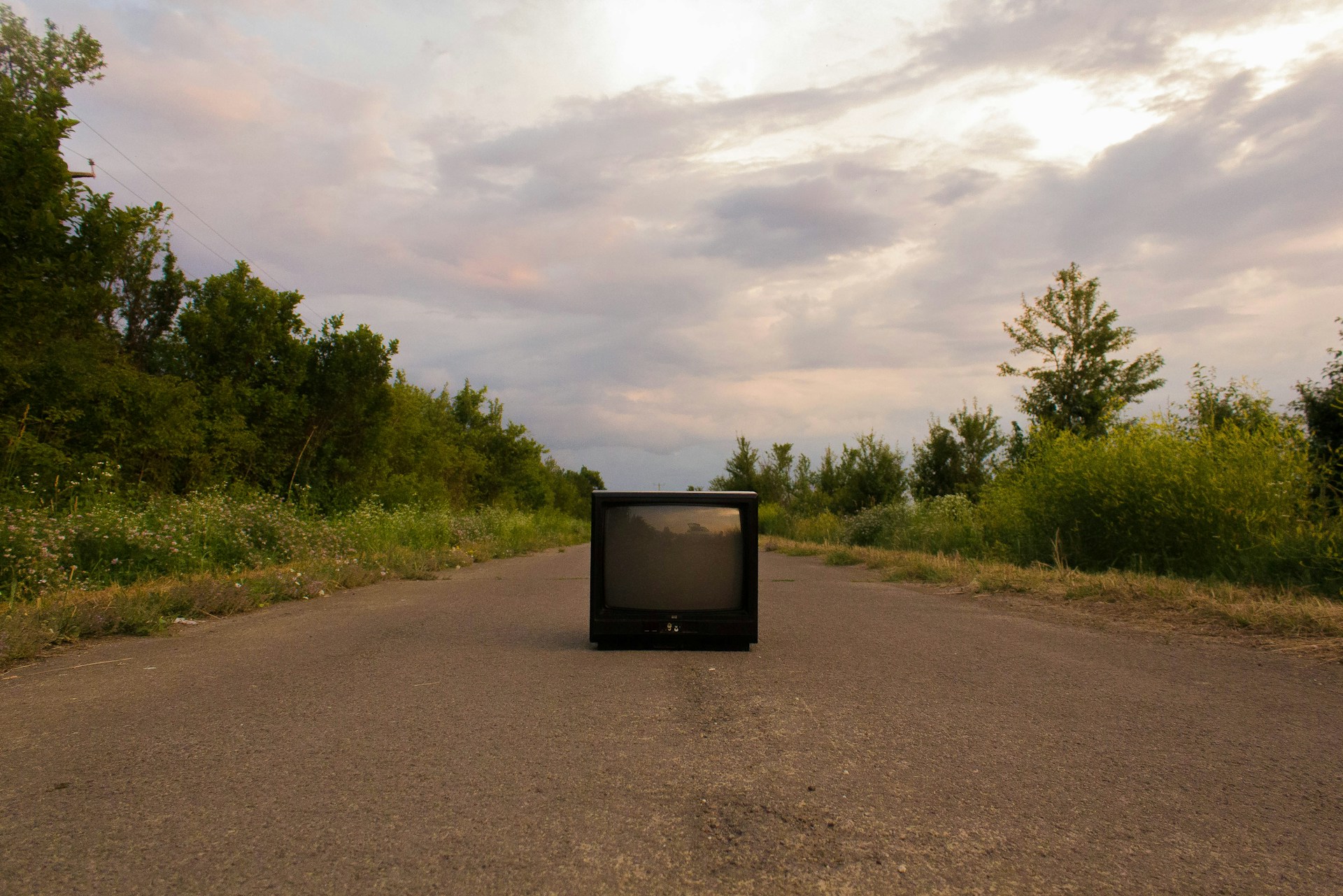
A couple of weeks ago, the writer and culture critic Derek Thompson published a piece arguing that “everything that is not already television is turning into television,” including social media, podcasts, and AI. TikTok is conquering the digital world with short-form vertical videos, podcasts are becoming YouTube channels, and the leading AI “chatbots” are all, in essence, racing to become the best deepfake generators.
Why does this matter? For reasons Mom would have recognized in 1976: “When literally everything becomes television,” Thompson argues, “what disappears is not something so broad as intelligence (although that seems to be going too) but something harder to put into words, and even harder to prove the value of. It’s something like inwardness. The capacity for solitude, for sustained attention, for meaning that penetrates inward rather than swipes away at the tip of a finger.”
“Right,” Mom would say, “TV turns people into lazy brats with rotten brains.”
Assuming Thompson and Mom are broadly right about the deleterious effects of too much TV, what can be done about the fact that it’s taking over all media? Can anything pop the televisual bubble?
Recently, I’ve begun to wonder if the rise of AI video might portend the end of TV’s power, at least in one important sense.
How so?
Television’s appeal depends on an illusion. When we look at our screens, we believe that we are seeing reality unfold before us, perceiving faraway parts of the world “as if we were there.”
We aren’t, of course.
At most, we’re seeing the parts of reality that a person behind a camera chooses to show us. Quite often, we’re seeing a “reality” that was carefully and intentionally contrived for us as viewers.
Televised fiction relies entirely upon such contrivance: the creation of sets and sound stages, the careful positioning of lights, the planning of movements and interactions, the scripting of dialogue. Televised nonfiction relies, more or less, on all of the same. To some degree, it’s all scripted, staged, and packaged to suit the medium.
In no case are we seeing the world as we do in real life, as embodied beings moving through physical space. IRL, our field of view is 180 degrees wide. IRL, we have continuous, live inputs from our ears, noses, and skin that we integrate with what we see. IRL, we turn and look in different directions, based on our own volition or reflexes.
In real life, we are not sitting still in the dark, entranced by a screen, ignoring the rest of the world around us. We are in motion, engaging with multidimensional objects in multidimensional physical environments. (When Mom told me to “Go play outside!” or “Make something!”, she was preferring real, embodied interaction to the virtual sort, even though she didn’t describe it that way.)
The word “television” implies the illusion we all enjoy when we sit and look at a screen: “Tele” plus “vision” suggests the miraculous capacity to project our sensory faculties over great distances, to see from afar. It obscures the technological reality: A camera captures a series of still images in rapid succession; these images are edited and packaged in various ways to meet the requirements of the medium; they are then transmitted electronically to faraway places, where other devices use their own programmatic rules and conventions to produce “moving pictures” for us to enjoy.
Done well, the technological magic behind television disappears: It enables us to believe that what we’re seeing through the camera, the recording, the transmission, the playback, just is the visible truth, the plain and obvious facts of the world unfolding.
No matter how staged, edited, or packaged, the images on our screens carry an air of indisputability. A news broadcast might be selective about what it shows, but the events it depicts seem undeniable. A documentary might frame its subject provocatively, but we assume its footage captures actual people and places. Even “reality TV,” with all its producer manipulation, relies fundamentally on the premise that something is actually occurring when the cameras start rolling.
The implicit promise of TV has always been roughly this: I will show you the world beyond. My screen will function as a window onto distant events and places. Even if that window sometimes distorts or selectively represents the truth, it will still be a window onto parts of the world you cannot otherwise see. The hurricane footage I share will show you a distant storm. The body-cam footage I share will reveal an actual crime. My live feed will show you the player, the coach, or the president himself answering questions.
AI-generated video obliterates this promise.
When a video can be conjured entirely from training data—when there is no camera, no event, no referent in physical reality—all bets are off.
When we can no longer tell which videos are AI-generated, we can no longer distinguish between video-as-visual-evidence and video-as-ultimate-deception.
This produces an epistemological rupture unlike anything television has ever known. It’s not just that we discover that TV distorts the truth (we’ve always known that at some level). It’s that we fundamentally lose the ability to trust what we see on our screens.
Put another way: In a world full of AI-generated video, we can no longer naively believe in tele–vision. We can no longer believe that what we see from afar is just as believable as what we see up close.
Thompson worries that TV’s steady march across all media will further erode our capacity for sustained attention, inward reflection, and meaning that’s more than swipe-deep. I wonder if, by blowing up TV’s fundamental promise, AI might just push us back toward embodied experience as the best and most reliable ground for knowing.
Not because we’ll give up our screens entirely (we won’t, and shouldn’t), but because we’ll stop giving them the benefit of the doubt. We’ll see what they show us as systematically untrustworthy, as always needing careful corroboration and verification.
In a world where any video might be entirely fabricated, Mom’s insistence on direct experience and physical engagement ceases to look quaint and starts to feel like the only way to return to our senses.
By going outside. Touching grass. Making something with your hands. Doing the stuff that always made Mom proud.
My advice? Try it out and see what you think. What seems more true to you, the stuff you see on the screen, or the life you shape by hand?
Best,
Steve
Still curious? Here’s a related (and recently updated) post on TV and our modern media predicament: “Public Discourse in a Peekaboo World“
Discover more from Truths & Wonders
Subscribe to get the latest posts sent to your email.
